Forecast Details for Lutsen, MN

Recent Locations: Oneida, PA   Norris, IL   Lutsen, MN  
Current Alerts for Lutsen, MN: Dense Fog Advisory
Tonight: Patchy fog before 3am, then areas of fog after 5am. Otherwise, mostly cloudy, with a low around 35. Calm wind.
Thursday: Areas of fog between 8am and 11am. Otherwise, mostly sunny, with a high near 47. Calm wind becoming south around 5 mph.
Thursday Night: A 20 percent chance of rain after 1am. Patchy fog before 10pm. Otherwise, mostly cloudy, with a low around 36. East wind 5 to 10 mph, with gusts as high as 15 mph.
Friday: Rain likely and possibly a thunderstorm, mainly after 4pm. Mostly cloudy, with a high near 49. East wind 5 to 10 mph, with gusts as high as 20 mph. Chance of precipitation is 70%. New rainfall amounts between a quarter and half of an inch possible.
Friday Night: Rain likely before 4am, then a slight chance of snow. Some thunder is also possible. Mostly cloudy, with a low around 27. Blustery, with a northwest wind 10 to 15 mph, with gusts as high as 30 mph. Chance of precipitation is 60%. Little or no snow accumulation expected.
Saturday: A 10 percent chance of snow before 7am. Partly sunny, with a high near 33. Breezy, with a west wind around 15 mph, with gusts as high as 30 mph.
Saturday Night: A slight chance of snow. Mostly cloudy, with a low around 23. Blustery, with a northwest wind 10 to 15 mph, with gusts as high as 30 mph.
Sunday: Mostly sunny, with a high near 37. Northwest wind 5 to 10 mph, with gusts as high as 25 mph.
Sunday Night: Mostly clear, with a low around 26. Northwest wind around 5 mph becoming calm.
Monday: Mostly sunny, with a high near 44. Calm wind becoming south around 5 mph in the morning.
Monday Night: Partly cloudy, with a low around 36. Southeast wind around 5 mph becoming west after midnight. Winds could gust as high as 15 mph.
Tuesday: Mostly sunny, with a high near 50. West wind around 5 mph, with gusts as high as 15 mph.
Tuesday Night: Mostly clear, with a low around 34. Northwest wind around 5 mph.
Wednesday: Sunny, with a high near 46. North wind around 5 mph becoming southeast in the afternoon.

Want more detail? Get the Complete 7 Day and Night Detailed Forecast!

Want to Receive our Free Daily Forecast Emails in your inbox by 5 a.m.?
There are no ads! Learn More
We respect your privacy and will not share or sell your email with anyone.

Current U.S. National Radar--Current

The Current National Weather Radar is shown below with a UTC Time (subtract 5 hours from UTC to get Eastern Time).

Current U.S. National Radar

National Weather Forecast--Current

The Current National Weather Forecast and National Weather Map are shown below.

Today's National Weather Map

National Weather Forecast for Tomorrow

Tomorrow National Weather Forecast and Tomorrow National Weather Map are show below.

Tomorrows National Weather Map

North America Water Vapor (Moisture)

This map shows recent moisture content over North America. Bright and colored areas show high moisture (ie, clouds); brown indicates very little moisture present; black indicates no moisture.

North American Water Vapor Map

Weather Topic: What are Stratocumulus Clouds?

Home - Education - Cloud Types - Stratocumulus Clouds
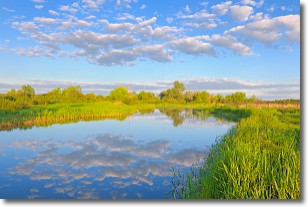
Stratocumulus Clouds Next Topic: Stratus Clouds

Stratocumulus clouds are similar to altocumulus clouds in their fluffy appearance, but have a slightly darker shade due to their additional mass.

A good way to distinguish the two cloud types is to hold your hand out and measure the size of an individual cloud; if it is the size of your thumb it is generally an altocumulus cloud, if it is the size of your hand it is generally a stratocumulus cloud.

It is uncommon for stratocumulus clouds to produce precipitation, but if they do it is usually a light rain or snow.

Next Topic: Stratus Clouds

Weather Topic: What are Wall Clouds?

Home - Education - Cloud Types - Wall Clouds
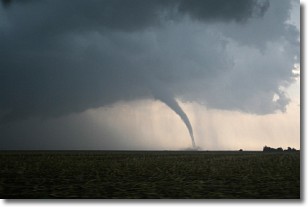
Wall Clouds Next Topic: Altocumulus Clouds

A wall cloud forms underneath the base of a cumulonimbus cloud, and can be a hotbed for deadly tornadoes.

Wall clouds are formed by air flowing into the cumulonimbus clouds, which can result in the wall cloud descending from the base of the cumulonimbus cloud, or rising fractus clouds which join to the base of the storm cloud as the wall cloud takes shape.

Wall clouds can be very large, and in the Northern Hemisphere they generally form at the southern edge of cumulonimbus clouds.

Next Topic: Altocumulus Clouds

Current conditions powered by WeatherAPI.com